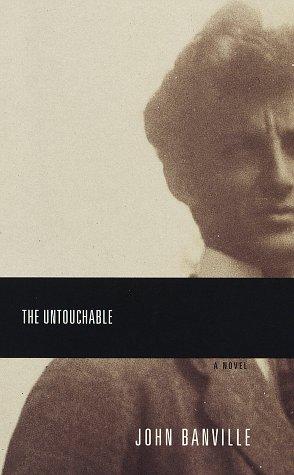
The Untouchable by John Banville
Last updated:
- Published
- 1997 (Picador)
- Length
- About 370 pages
- Narrator
- Victor Maskell, art historian and spy
- Based on
- Anthony Blunt, one of the Cambridge spies
- Setting
- Cambridge, London and wartime Europe, 1930s to 1970s
- Prize
- Lannan Literary Award 1997
Put that question to Banville fans and a surprising number won't name The Sea. They'll go for this one. The Untouchable is, sort of, a spy novel, but at heart it's about lying, about art, and about what it's like to be old and caught out.
What's it about?
Victor Maskell is an elderly, rather grand art historian. For years he was in charge of the King's paintings. He's a Poussin expert. And he's just been publicly exposed as a Soviet spy, which has brought his comfortable life crashing down overnight.
So he sits down to write his own account of events. We're taken back to his Protestant boyhood in the north of Ireland, and then to Cambridge in the 1930s, where bright young men talked themselves into communism over sherry. The story moves on through the war, the secrets and the long decades of double life. Along the way, there's a mission into occupied Germany to recover some letters that could badly embarrass the royal family.
The real story behind it
Maskell is drawn quite closely from Anthony Blunt, the art historian and Surveyor of the Queen's Pictures, who in 1979 was exposed as a member of the Cambridge spy ring, along with Kim Philby, Guy Burgess and Donald Maclean. Burgess and various others appear in the novel under altered names. Banville also took a little from the poet Louis MacNeice, who had known Blunt at school.
Banville has mentioned that the inspiration struck while he was watching a clip of Blunt smiling to himself when he thought no one was observing. That quiet smile is something you can sense on every page.
Why it works so well
In plenty of respects, Maskell is a horrible person. Snobbish, cold, a professional liar. But he's also very funny, very sharp, and wierdly honest about his own vanity. Banville has a soft spot for this sort of narrator, and Maskell might just be the best of the lot.
The novel touches on secrecy that goes further than espionage. Maskell is gay during an era when it was illegal in Britain, and the story implies that leading one concealed existence made it easier to slip into another. There's a lovely, dry joke buried in that: by the time homosexuality was decriminalised, he'd partly lost the excitement of having anything to keep hidden.
Then there’s the painting. Maskell’s most treasured possession is a Poussin, The Death of Seneca, and his feeling for it gives away more about him than anything he says out loud.
Who should read it?
If you like le Carré but wish he'd spent a bit more time on the sentences, this one's for you. It'll also suit you if you enjoyed Alan Bennett's plays about Blunt and Burgess, or if you've read The Sea and want something with more story to it. Compared with most Banville novels, it's longer and busier, and probably the most fun.
Questions people ask
Is The Untouchable a true story?
It's fiction, but it draws very closely on real people and events. The names have been changed, and Banville invents quite freely, particularly where Maskell's private life is concerned.
Who is Victor Maskell based on?
Mostly Anthony Blunt, the art historian and Soviet spy who was unmasked in 1979. A few bits of his background are drawn from Louis MacNeice.
Do I need to know about the Cambridge spies first?
No. The book gives you what you need. Though it's more fun afterwards to look up the real people and spot who's who.
Next up: our picks for where to start, or the full list of books in order.